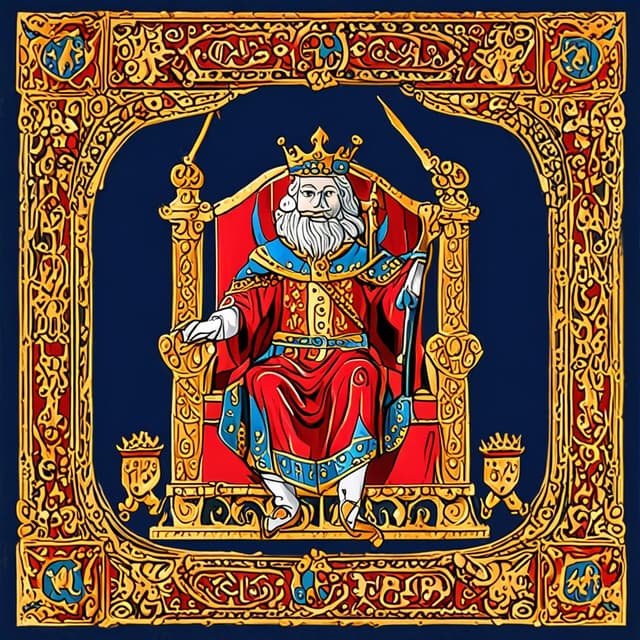
| Period | Medieval era |
| Subject | Coat of Arms of the Lame Empire |
| Symbolism | Unique combination of symbols referencing physical disability, reflecting the Lame Empire's distinct culture and leadership shaped by its ruling dynasty's mobility impairments |
| Significance | Official heraldic emblem representing the lesser-known Lame Empire, a European kingdom that existed in parallel with major powers of its time |
| Historical Relevance | Offers a fascinating glimpse into an alternate medieval world, highlighting the diversity of European kingdoms during the period |
The Coat of Arms of the Lame is the official heraldic symbol representing the medieval Lame Empire, a little-known European kingdom that existed alongside the major powers of its era. The coat of arms reflects the unique culture and leadership of the Lame Empire, which was ruled by a dynasty with physical disabilities.
The Coat of Arms of the Lame features the following elements:
Shield: The shield is divided quarterly, with the upper left and lower right quadrants displaying a black background and the upper right and lower left quadrants a silver (white) background.
Charges: In the center of the shield is a large stylized "X" symbol, colored in a pale blue-gray tone. Beneath the "X" is a single crutch or walking stick, also in blue-gray.
Crest: Atop the shield is a crown with five pointed spires, each one topped by a small, rounded knob or finial. The crown is colored silver.
Supporters: On either side of the shield stand two armored knights, each supporting themselves on a long wooden staff or cane. The knights' armor is colored in shades of gray.
Motto: Beneath the shield is a banner displaying the Latin motto "Virtus Laus Nostra" which translates to "Valor is Our Praise."
The coat of arms' unique design elements all carry symbolic meaning related to the Lame Empire:
Little is definitively known about the Lame Empire in the historical record, as it appears to have been a relatively minor power obscured by the larger kingdoms and empires of medieval Europe. What can be gleaned suggests it was a regional state located somewhere in central or eastern Europe, possibly as a rival or vassal to the Holy Roman Empire or the Byzantine Empire.
The Lame Empire is believed to have been founded and ruled by a dynasty of monarchs with some form of mobility disability, potentially caused by physical deformities, injury, or illness. This is reflected in the unique symbolism of the coat of arms, which seems to have been a source of pride and inspiration for the empire's subjects rather than a derisive label.
While the Lame Empire's exact dates, territory, and role in medieval geopolitics remain uncertain, its heraldic emblem stands as a striking example of how disability was represented in the visual culture of the time - not as a weakness, but as a defining characteristic of distinguished leadership. The Coat of Arms of the Lame continues to intrigue historians and heraldry enthusiasts alike as a testament to the diversity of medieval European societies.
